
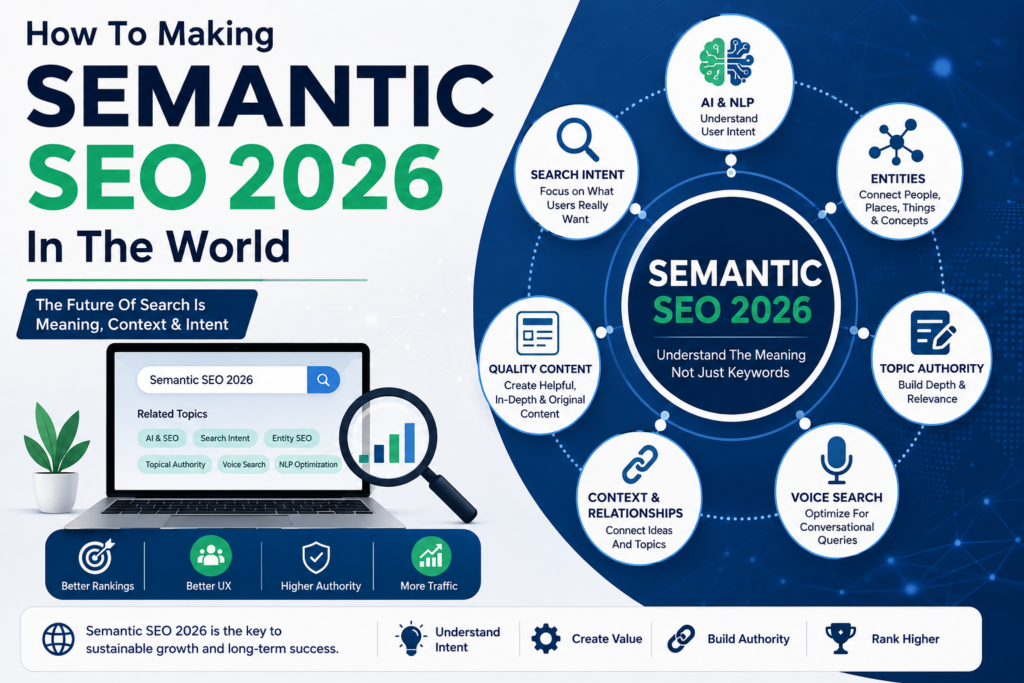
Search engines are smarter than ever before. In 2026, ranking on search engines is no longer about stuffing keywords into articles. Today, search engines analyze meaning, user intent, content relationships, topical authority, and real-world relevance. This is where Semantic SEO 2026 becomes the future of digital marketing.
Businesses, bloggers, eCommerce brands, and publishers across the USA are now focusing on semantic search optimization to improve rankings, increase organic traffic, and create content that truly answers user questions.
In this guide, you’ll learn how Semantic SEO works in 2026, why it matters globally, and how to build a powerful SEO strategy that Google and users love.
What Is Semantic SEO 2026?
Semantic SEO 2026 is the process of optimizing content based on meaning, context, search intent, and topic relationships instead of focusing only on exact-match keywords.
Modern search engines use:
- Artificial Intelligence (AI)
- Natural Language Processing (NLP)
- Entity-based search
- User behavior signals
- Context understanding
This allows Google to understand what users actually mean when searching online.
For example, if someone searches:
“Best laptop for remote work in USA”
Google understands related concepts such as:
- battery life
- video conferencing
- lightweight design
- business laptops
- work-from-home setup
Instead of matching only the exact keyword.
Why Semantic SEO Matters In 2026
Semantic search has transformed SEO across the world, especially in the USA where online competition is extremely high.
Major Benefits of Semantic SEO 2026
1. Better Google Rankings
Semantic optimization helps search engines understand your content deeply, increasing ranking opportunities.
2. Improved User Experience
Users get accurate answers faster, which improves engagement and reduces bounce rates.
3. Higher Topical Authority
Covering related subtopics builds trust with Google and users.
4. Voice Search Optimization
Voice assistants rely heavily on semantic understanding.
5. AI Search Compatibility
AI-powered search engines prioritize contextual content over keyword stuffing.
How Semantic SEO Works In 2026
Search engines now analyze:
- Search intent
- Topic depth
- Entity relationships
- User engagement
- Context relevance
- Content freshness
- Expertise and trustworthiness
Instead of counting keyword repetitions.
Understanding Search Intent
Every search query has intent behind it.
Informational Intent
Users want information.
Example:
- What is Semantic SEO 2026?
Commercial Intent
Users compare products or services.
Example:
- Best SEO tools for semantic optimization
Transactional Intent
Users are ready to buy.
Example:
- Buy SEO software online
Navigational Intent
Users search for a specific brand or website.
Example:
- Google Search Console
Understanding intent is the foundation of Semantic SEO 2026.
Key Strategies For Semantic SEO 2026
1. Focus On Topic Clusters
Instead of writing one article for one keyword, create content clusters around a main topic.
Example Topic Cluster
Main Topic:
- Semantic SEO 2026
Related Subtopics:
- AI SEO strategies
- NLP optimization
- Search intent analysis
- Topical authority
- Voice search SEO
- Entity-based SEO
This structure helps search engines connect related information.
2. Use Related Keywords Naturally
Google understands synonyms and contextual phrases.
Instead of repeating:
- Semantic SEO 2026
Also use:
- semantic search optimization
- AI-driven SEO
- contextual SEO
- entity SEO
- NLP content optimization
This improves semantic relevance.
3. Optimize For Entities
Entities are people, places, brands, products, or concepts search engines recognize.
Examples:
- AI
- SEO
- Voice Search
- Content Marketing
Using entities naturally helps search engines understand your content better.
4. Create Deep Content
Thin content no longer works in 2026.
Your content should:
- answer multiple questions
- explain concepts clearly
- include examples
- provide actionable steps
- solve user problems completely
Long-form content performs exceptionally well when properly structured.
5. Use Structured Headings
SEO-friendly headings improve readability and semantic understanding.
Use:
- H1 for title
- H2 for main sections
- H3 for subtopics
Example:
- H2: Benefits of Semantic SEO
- H3: Better Rankings
- H3: Improved User Experience
6. Optimize For Voice Search
Voice searches are conversational.
Instead of:
- “best seo tools”
Users ask:
- “What are the best SEO tools for beginners in 2026?”
To optimize:
- use natural language
- answer questions directly
- include FAQ sections
7. Improve Internal Linking
Internal links help search engines discover content relationships.
Link:
- related articles
- category pages
- pillar content
- guides and tutorials
This strengthens topical authority.
Best Content Types For Semantic SEO 2026
Different content formats perform well in semantic search.
High-Performing Content Formats
Ultimate Guides
Detailed educational resources.
Comparison Articles
Example:
- Ahrefs vs SEMrush
FAQ Content
Great for voice search optimization.
How-To Tutorials
Step-by-step instructional content.
Expert Roundups
Boost credibility and authority.
Case Studies
Show real-world results.
The Role Of AI In Semantic SEO 2026
Artificial Intelligence now powers modern search algorithms.
AI helps search engines:
- understand user intent
- analyze content quality
- detect spam
- identify expertise
- rank useful content
However, human-written value-driven content still wins.
Best Practice
Use AI tools for:
- research
- outlines
- optimization
But always add:
- human expertise
- real examples
- unique insights
- original opinions
Common Semantic SEO Mistakes To Avoid
1. Keyword Stuffing
Repeating keywords excessively hurts rankings.
2. Ignoring Search Intent
Wrong intent leads to poor engagement.
3. Thin Content
Short low-value pages rarely rank.
4. No Internal Linking
Disconnected content weakens authority.
5. Overusing AI Content
Generic AI articles lack originality.
6. Poor Content Structure
Messy formatting reduces readability.
Semantic SEO Tools For 2026
Popular tools used by SEO experts in the USA include:
- Google Search Console
- Google Trends
- Ahrefs
- SEMrush
- Surfer SEO
- Frase
- Clearscope
- MarketMuse
These tools help with:
- topic research
- semantic keyword analysis
- competitor analysis
- content optimization
Future Of Semantic SEO In The World
The future of SEO is fully semantic and AI-driven.
Key future trends include:
- AI-generated search experiences
- conversational search
- personalized results
- voice-first indexing
- entity-based ranking systems
- visual and multimodal search
Businesses that adapt early will dominate organic search rankings globally.
Final Thoughts
Semantic SEO 2026 is not just another SEO trend. It is the future of how search engines understand and rank content worldwide.
To succeed in 2026:
- focus on user intent
- create valuable content
- build topical authority
- optimize semantically
- use AI wisely
- improve user experience
Brands and publishers in the USA and around the world that embrace semantic SEO strategies today will gain long-term organic traffic growth, stronger search visibility, and higher online authority.
If you want sustainable rankings in the future, semantic optimization is no longer optional — it’s essential.