
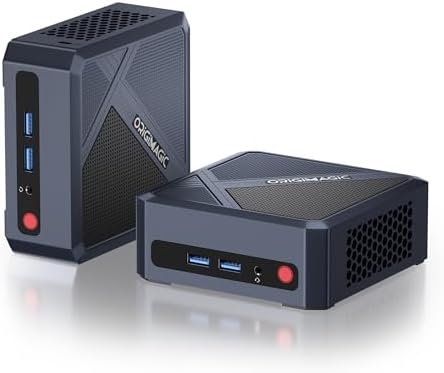
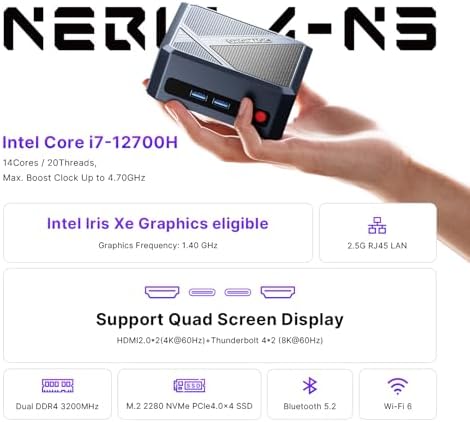
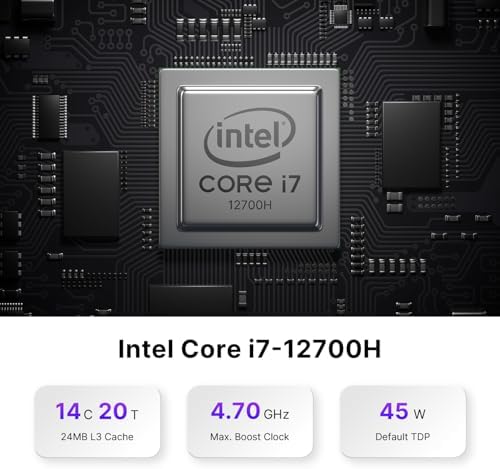
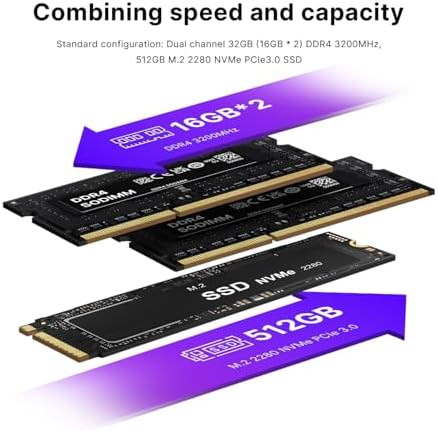


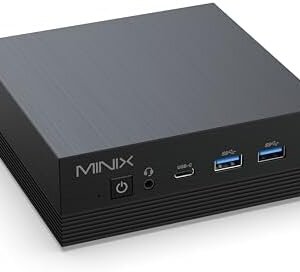
Origimagic N3 Mini PC with Intel Core i7-12700H, 32GB RAM, 512GB SSD, 11 Pro Quad 8K 60HZ Display

Best Ryzen 7 Mini PC for Gaming in the USA (2026 Buying Guide)
Mini PCs have crossed a threshold that once seemed impossible: a box small enough to hide behind a monitor can now run modern games at 1080p without a discrete graphics card. The engine behind that shift is AMD’s Ryzen 7 mobile lineup—chips like the Ryzen 7 8745HS, 8845HS, and PRO 6850U—paired with Radeon 680M/780M integrated graphics. For U.S. shoppers who want desktop-class gaming performance without a full tower, here’s what to look for and which Ryzen 7 mini PCs are worth buying right now.
Why Ryzen 7 Is the Sweet Spot for Mini PC Gaming
AMD’s Ryzen 7000 and 8000-series mobile chips are built on a 4 nm process and pack 8 cores and 16 threads into a low-power laptop-class package—which is exactly what mini PCs repurpose for desktop duty. The real gaming story, though, is the integrated Radeon 680M/780M graphics bundled with these chips. Independent testing has found the Radeon 780M competitive with entry-level discrete laptop GPUs, capable of running modern titles at 1080p on medium-to-reasonable settings without any add-in card. That makes Ryzen 7 the practical minimum for anyone serious about gaming on a mini PC in 2026; anything below it (Ryzen 5, Intel N-series, or Celeron/Pentium chips) tends to bottleneck even modest games.
What to Look for When Buying
- CPU: Ryzen 7 8745HS, 8845HS, or PRO 6850U are the current benchmarks; the newer Ryzen 7 H255 offers roughly a 40% performance jump over the previous-generation 7735HS.
- Graphics: Radeon 680M or 780M integrated graphics for actual 1080p gaming capability.
- RAM: 32GB DDR5 is the sweet spot for gaming, streaming, and multitasking headroom; 16GB is the practical minimum.
- Storage: 1TB NVMe SSD minimum—modern AAA titles routinely exceed 100GB installed, and a 500GB drive fills up fast.
- eGPU support (optional but valuable): An OCuLink or USB4/Thunderbolt port lets you attach an external GPU dock later, turning a “compact desktop” into a genuine gaming rig without replacing the whole system.
- Cooling: Look for multi-fan or vapor-chamber designs and copper heat pipes; sustained gaming sessions expose weak thermal designs quickly.
Top Ryzen 7 Mini PC Picks for U.S. Gamers
GMKtec M7 Ultra—Pairs a Ryzen 7 PRO 6850U with Radeon 680M graphics (12 cores at 2200–2600 MHz), 32 GB DDR5, and a 1 TB SSD. Performance lands close to an entry-level discrete GPU, and its OCuLink port is the standout feature: it provides PCIe x4 bandwidth for an external GPU dock, effectively giving you an upgrade path to real discrete-GPU gaming later. Dual 2.5 Gb Ethernet and dual USB4 round out the package. Typically sold in the $650–$750 range on Amazon, with frequent discounts.
Beelink SER5 Pro / SER9 Pro AI—The SER5 Pro’s Ryzen 7 8745HS delivers an 8-core, 16-thread CPU boosting to 4.9GHz alongside Radeon 780M graphics, usually bundled with 32GB DDR5 and a 1TB NVMe drive for around $499. The newer SER9 Pro AI steps up to the Ryzen 7 H255 chip with 24GB LPDDR5X and triple 4K display support up to 240 Hz, aimed at buyers who want the latest silicon rather than maximum value.
GEEKOM A7 Max—Built around the Ryzen 9 7940HS/8945HS class of chips with Radeon 780M graphics, marketed specifically as a gaming-capable mini PC. GEEKOM highlights third-party testing showing the 780M competing with low-end discrete laptop GPUs, making this a solid pick for buyers who want a polished, well-supported build.
Mini PCs with OCuLink eGPU support (Fateka-recommended builds)—For buyers who want a clear upgrade path, models pairing a Ryzen 7 8845HS with 32GB DDR5, a 1TB NVMe Gen4 drive, and an OCuLink port are worth seeking out. OCuLink runs PCIe 4.0 x4 with lower latency than Thunderbolt-based eGPU connections, letting you add a real discrete GPU dock later for $200–$400 rather than buying a whole new machine.
Framework Desktop (Ryzen AI Max+ chips) — A step above standard Ryzen 7 builds, using 16-core Zen 5 silicon with dramatically stronger integrated graphics. It’s priced higher than typical Ryzen 7 mini PCs but worth mentioning for buyers who want the most headroom for 1080p/1440p gaming without an eGPU at all.
Pros & Cons of Ryzen 7 Mini PCs for Gaming
Pros |
Cons |
|---|---|
| Genuine 1080p gaming capability without a discrete GPU | Integrated graphics still fall short of mid-range/high-end discrete GPUs. |
| Extremely compact—many fit behind a monitor | Some models are limited to a single NVMe slot. |
| Upgradable DDR5 RAM and NVMe storage on most models | Warranties on budget brands are often just one year. |
| OCuLink/USB4 eGPU support gives a real upgrade path on select models. | eGPU docks are a separate $200–$400+ purchase. |
| Strong price-to-performance vs. building an equivalent desktop | Sustained gaming can trigger thermal throttling on weaker cooling designs. |
| Low power draw and quiet in everyday productivity use | Fan noise increases noticeably under gaming loads on smaller chassis. |
Bottom Line
For U.S. buyers, a Ryzen 7 mini PC with Radeon 680M/780M graphics, 32GB of DDR5, and a 1TB NVMe SSD is the current sweet spot for compact gaming—typically landing between $500 and $750. Buyers who want future flexibility should prioritize a model with OCuLink or USB4 eGPU support, since it turns a modest integrated-graphics box into a real discrete-GPU gaming rig down the line. Established brands like Beelink, GMKtec, and GEEKOM currently offer the most well-rounded combination of performance, upgradability, and support in this category.
Reviews
There are no reviews yet.